Wednesday, November 15, 2006

Is the bubble about to burst?

Real estate is an interesting thing.

I was lucky enough to buy my first place when I was 23 - it was a shitty 100 year old villa that took me 7 years to finish. I learned a lot about DIY and property by getting involved pretty early on.


At one point, I was pretty close to the wire and sold my car, so I was biking to work each day, and sometimes buying milk or bread with money that could only come out of the coin jar. Oddly enough, I look back at those times with some pretty fond memories because those are the times when it seems that strength of character and ambition was more important than financial security. Those sorts of conditions can bring out the best (or worse) in a person.
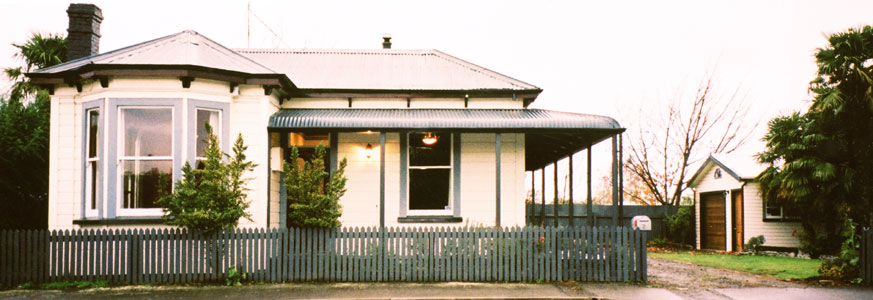
Anyway, in NZ we have experienced a bit of a property boom since about mid 2001 - virtually to the month that we sold the house and left NZ for our 2-3 year Overseas Experience...that is now into it's 6th year. According to the stats, property rises have averaged 20% p/a for the last 4-5 years in some parts of NZ, and 80-100% increase in home values are not that uncommon. It's a similar sotry in other parts of the world, maybe the dates are different.
My view is that there is a correction coming. For the last 100 years, property has averaged more like 4-7% p/a in various parts of the world, so you have to ask yourself what impact the last 5 years of boom is going to have on the market in the next few years, if we are going to maintain that 4-7% p/a average.

Fortunately for me, I bought my first place when some people were reducing prices to sell. Indeed, Real Estate was going down. (I'm only talking the early-mid 90s here!)
These days, there is a new breed of people (or just those who have short memories) that believe 15-20% p/a increases are completely sustainable for the rest of their lives. Many people believe that this 15-20% p/a gain is something magical, "it's just the market showing it's true value" etc etc, but in the last few years, I believe that perhaps these unrealistic gains have been fueled by greed.
There are plenty of people who see 'flipping' as a realistic way to get ahead. Basically buying a place with the intention of selling it pretty quickly to the next person for a profit. Ya know, almost like MLM or Pyramid Selling.
The problem is, many of these people believe in "can't lose" mentality that they them selves are not content to cash up and enjoy the profits of their flips, rather, they extend their debt even further, making sure they are maximizing any equity they had by borrowing to the limit.
There is no belief that interest rates could possibly hike, or that the bubble will burst. Anyway, I think you get the idea.

Here is an interesting blog. It is by a 24 year old budding "investor", who didn't know any better and took what we wanted to believe from various get rich quick seminars. His name is Casey Serin, and he bought 8 houses in 8 months with no money down, and lost. http://iamfacingforeclosure.com/1/why-i-am-facing-foreclosure/

Check out out some of the comments. Wow.

Why is Real Estate so interesting? Cos is can make smart people do dumb things, and dumb people do smart things.

Tuesday, November 14, 2006

Some Kiwi Humor

I remember seeing the first 42 Below Vodka ad circulating on email about 3-4 years ago. Sometimes living away from home, it's easy to forget some of the stuff that makes ya laugh and other people stare at you like you need help.

I figured there must be more, so in between my busy appointments today, I decided to see what I could find.

Well, treasure hunters, you are in luck.

There is a whole collection of this stuff made by 42 Below Vodka. Very much bordering on offending even the PC police, but who cares right?

http://www.42below.com/flashad/storyof42/


Wednesday, November 08, 2006

Best Inventions of 2006

I have been incredibly busy lately, so apologies for not blogging. (well actually I haven't been that busy, but ya know how sometimes you look at the calendar and realise it's a month later than you thought?)

Here is a pretty interesting read:
http://www.time.com/time/2006/techguide/bestinventions/

Monday, October 16, 2006

Incredible learning tool

Check out this amazing video. It's for real. This is really, really clever, and gives us a glimpse of how software is going to be used in future.


Sunday, October 15, 2006

Photography Exhibition Numero Uno

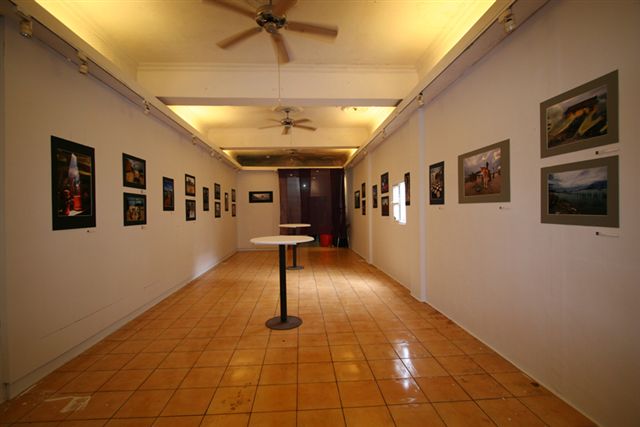
On Friday and Saturday nights, the Arty Farty One hosted her very first photography exhibition, which was held in conjunction with, and as part of, a fundraiser party for a foreign guy, Mark Selikoff, who is currently in a coma after a serious motorcycle accident Sept 27th.

The venue was the River Bar, Jhongli, which has a small gallery area upstairs. It went pretty well considering the short notice, and everyone that came really enjoyed the shots.

Here is an online version of the exhibition I put together for the Arty Farty One:
http://www.truant.net/Vietnam_Cambodia_2006/index.html

Here is what the venue looked like a few hours before everyone came (taken during the day):


Friday, October 13, 2006

Simplistic Theory #2: Units of Time

Being the simplistic fella that I am, I link to come up with theories that measure certain sides of life, and in doing so, try to work out the best way to learn from the past to get the most out of the future.

One simplistic theory I came up with maybe 20 years ago was the theory of People Categories. It's highly un-PC, but it's the science of categorising a complete stranger based on how they look and act and comparing that data to what you already know. Basically, it helps determine how to deal with that person, what they are likely to enjoy or dislike, whether they are more likely to be a dick or an asshole.....that sort of thing. But that is Simplistic Theory #1, which I will go into detail another day.

Simplistic Theory #2 is the Theory of Units of time. Having been fortunate enough to live and work in different countries, I have picked up on a very little observed phenomin, fenomin, phanomin thing. The unit of time you need to work to is determined by your lifestyle. Lemme explain....
In NZ for example, you can drive anywhere in most citys in about 20mins, you can generally park right out the front FOR FREE, Stores are generally deserted. What this means is you can do ANYTHING in a unit of time that is 30mins long. Sometimes you might need 2 units, say meeting a friend for coffee. 3 units for a nice meal, 4 units to go have a BBQ at the beach. You get the idea. In Singapore, the unit was closer to 1 hr. London it was 2 hrs, Here in Taiwan, it's closer to about 3hrs.
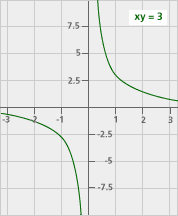
I think I have worked out the pattern here, and here is the formula:

The quality of a lifestyle is inversely proportional to the unit of time used to maintain it.

WTF? Well, I think it should be an aim in life to get your unit of time down to as small as possible. Why? Well, think about when you try to hook up with friends, how it sometimes seems impossible to get a slot that matches. If I need 1 unit of time to go and buy a magazine here in Taiwan, then fitting in a coffee is going to be another 1 unit of time, so 6 hrs total. That's a big chunk of a day man....no can do. Let's do coffee July 23, 2009 at 2pm.
In NZ, a buddy want's to meet for Fish and Chips at the Marina?..no problem, be there in half an hour. With the food. And Beers.

What is the main cause of this? Well different places have different factors, such as population, congestion, weather, language barriers, scooters everywhere, notoriously bad punctuality...blah, blah. It all contributes to the required unit of time of a given place, which can be improved on with personal innovation.

So, why should we try to get our units of time down? Well, you get more out of life, that's why.

categories: [living_][strange_][thoughts_]

Thursday, October 12, 2006

The Best Photographer You've Never Heard Of

Stephen Kennedy

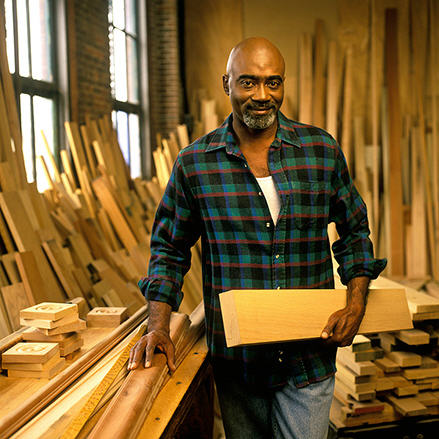
Check out this guy's portrait photography. These are not famous people, just ordinary folks in ordinary situations. What is so amazing about these shots? The lighting is fantastic, the focus is pin sharp, the composition is incredible, the depth of field is perfect. Even though technically the shots are brilliant, the magic is in the interaction the photographer has with the subject, it's outstanding.

Have a look at some of the portraits on his website, they're pretty cool.


StephenKennedy.com

Wednesday, October 11, 2006

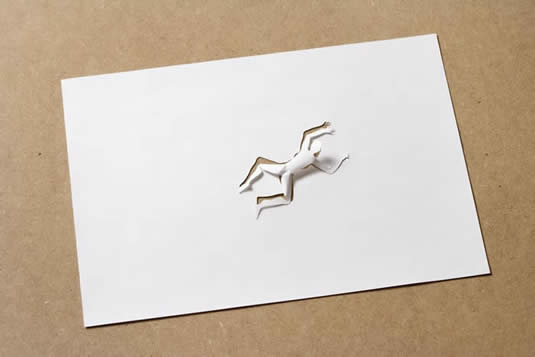
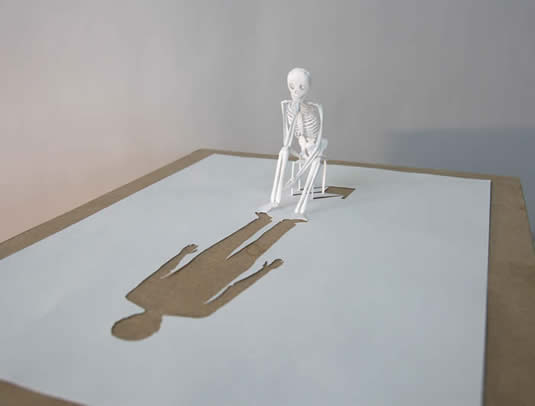
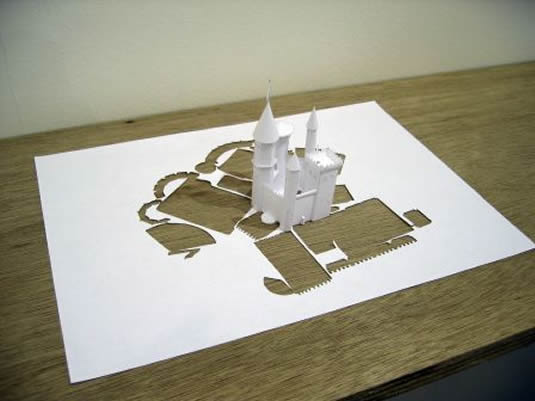
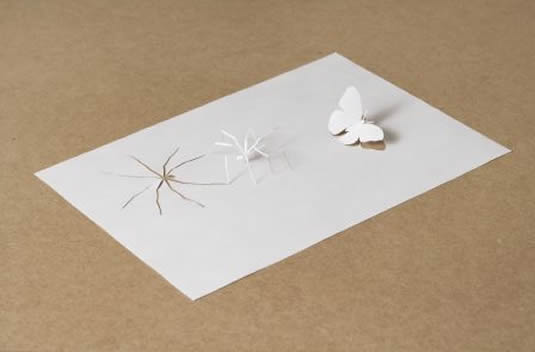
Paper Cuts

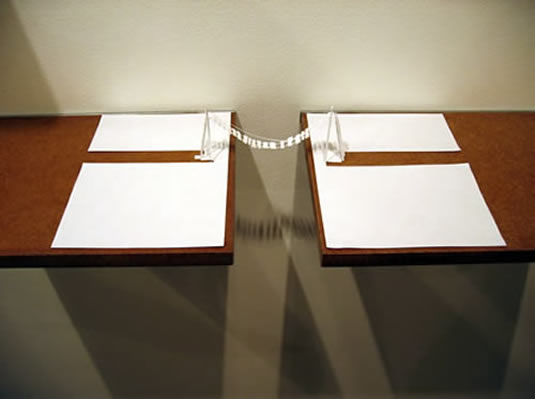
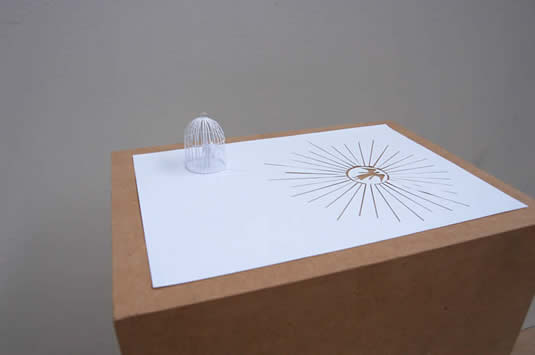
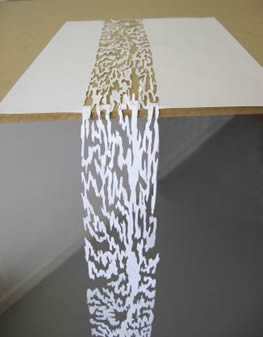
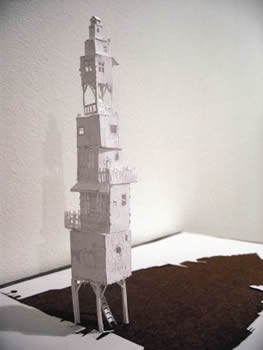
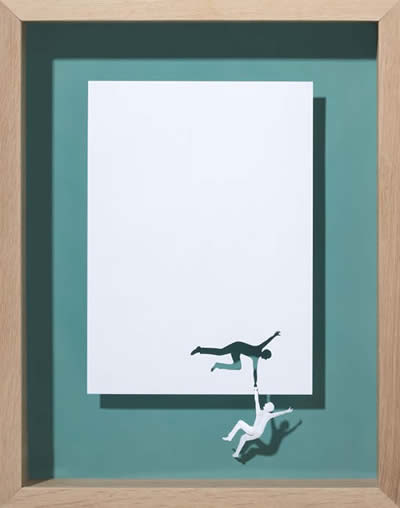
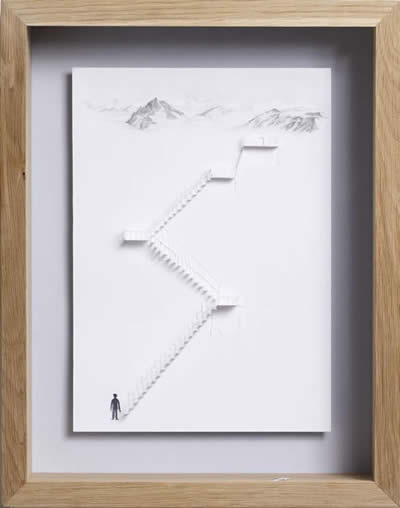
I got these pics by email today. No idea who did this, or if it is even one person...I figured this might have sort of cult following, so I did a wiki search on paper cuts. All I found of interest was Lingchi, a form of chinese torture known as 'a death by 1000 cuts'. Ouch.

I won't ramble on about this art, it speaks for itself. Click on a pic to enlarge (just slightly sorry)...


Wednesday, October 04, 2006

The Happy New House

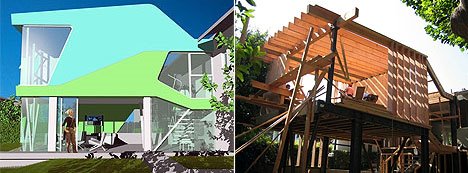
Architecture is interesting. People that are into Architecture are interesting....well I think so anyway.

Check out this. thehappynewhouse.com


My wife and I are remodeling the house we’ve lived in for the last sixteen years. We moved in before pets. Before kids. Before the internet.
We couldn’t afford the house when we bought it. Now, we can sort of afford it. We just can’t all fit inside of it. (We have three children -- two of whom are teenagers.)
So we’ve decided to build. Up. And out. More rooms. More showers. And most importantly, more places for us to accidentally bump into one another. Places to gather, to play, to sleep, to work on our laptops, to push back the furniture + dance, to hide from each other, to eat, to laugh, to live. In short, more opportunities -- under a single roof -- to connect with one another as a family.
It's an interesting website, and got a cool feel about it too.

thehappynewhouse.com
Check out the 'work in progress' section for all the shots of tools n concrete n steel n wood n stuff.

Lean on me

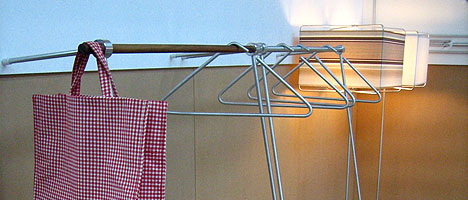
I like design ideas, and hanging out in design type stores. I even like going to IKEA.Anyway, Room Safari is a German design company with some pretty groovy ideas. This shot shows their Leanon coatrack , which is made to lean anywhere against a wall. Also shown in this pic are their Musical Triangle coathangers.

roomsafari.com


Friday, September 29, 2006

Sir Frank would be impressed

Sir Frank Whittle invented the Jet Engine in the 1930s.
As part of my engineering training in the RNZAF, I spent many hours studying how jet engines and the components that hang off them work, including rebuilding a jet engine to pass the course.
When I was working as a Aircraft Technician specializing in A4 Skyhawks, I was lucky enough to be a high power Jet Engine tester, which meant it was one of my jobs to sit in the cockpit of the recently serviced Fighter Jet and take the engine thru a test routine, which included going over 100% throttle while the jet was held back by a single (but big) chain. Slamming the throttle as fast as possible to test spool times was something I had to do - can you imagine that? It's really a difficult thing to describe, but sitting perhaps 2 meters in front of a Jet engine that is making a noise that can be best described as TERRIFYING HOWLING is extremely noisy, scary, exhilerating if not down right stupid...It sure gives some sense of importance in needing to put it together right.
Watching a jet go past in the sky is one thing, but try standing beside a jet at full noise and see what it is like. Now sit IN it......crazy.
I still think of my time working on A4s as a career highlight. That was a time I bolted out of bed to go play....er.... I mean work.

Check out this ( from the BBC)

Engine on a chip drives laptops

One of the components of the gas-turbine engine
Each component is made on silicon wafers
It is one of the most hotly contested and closely watched areas of research - how to provide the most efficient energy source for the mobile devices we carry with us.

Batteries and fuel cells are established contenders to power laptops and mobile phones, but now researchers at the Massachusetts Institute of Technology (MIT) have come up with a novel approach to the power conundrum - by building an engine on a chip.

Gas-turbine engines more normally power whole cities but MIT's Professor Alan Epstein was determined that miniscule versions could be used to "power a person".

Ten years on from having the brainwave, Professor Epstein believes the microengine could give batteries a run for their money, offering 10 times the power of a battery of the same weight at the same price point.

"A laptop that will run for three hours on battery charge will run for 15 to 20 years using the microengine and it should end up costing no more than current batteries," said Professor Epstein.

He believes it could be available commercially within three to five years.

Tiny scale

It has been a long road for Professor Epstein and his team of 50 other staff and students.

"When I first told people that I wanted to build a gas-turbine the size of a 50p piece they fell off their chairs laughing," he told the BBC News website.

But with the experts needed to make his vision a reality just a stone's throw from his office at MIT, it didn't take long to persuade them that he wasn't joking.

"A few days later they would call back with a way to do things and then they were hooked," he said.

So how exactly does one set about making a tiny fuel-burning engine? A compressor, a combustion chamber and a spinning turbine are all essential parts but obviously cannot be made in the conventional way on such a tiny scale.

So the team had to use etched silicon. The resulting microengine is made up of six silicon wafers piled on top of each other and bonded together.

To bring down costs, up to 100 components are made on one large wafer and cut into individual units.

The process begins with a tiny combustion chamber where fuel and air mix and burn at the melting point of steel. Turbine blades spin at 20,000 revolutions per second - 100 times faster than those in jet engines.

Fun process

Professor Alan Epstein shows off the microengine
The finished microengine fits in Prof Epstein's palm

A mini-generator produces 10 watts of power and a tiny compressor raises the pressure of air in preparation for combustion. The cooling process is managed by sending the compression air around the outside of the combustor.

Separately it has been proved that all the parts work so the challenge now is to test an integrated chip.

According to Professor Epstein, this should be done by the end of this year but it won't be easy.

Each microengine will be on a single piece of silicon so there is no margin for error. One tiny mistake in a single component would mean starting from scratch, and if anything needs to be changed, the whole design process would be back to the drawing board.

The journey so far has been "an astonishing amount of fun", said Professor Epstein, although, as with many projects, threw up surprising problems.

"What we thought was going to be hard, wasn't, and the things we hadn't thought about were the biggest problems," he told the BBC News website.

"We thought the combustor would be one of the hardest things but in fact it turned out to be the manufacturing of the bearings that was more difficult," he said.

Steam-powered laptops?

While Professor Epstein has lived and breathed his project for the last 10 years, he is aware that there is plenty of competition around.

Batteries are improving all the time, while announcements about advances in fuel-cell technology are regular and closer to commercial reality.

What technique wins out will ultimately be down to what consumers find most satisfactory.

"The users don't care about what powers their laptop. Whether it is chemistry or thermodynamics is a mere detail," he said.

The idea of engine-powered laptops may seem outlandish but research is ongoing to put other types of engine on chips, according to Professor Epstein.

As well as millimetre-scale combustion engines, there is also the possibility of laptops powered by steam engine - which would perhaps be the ultimate collision between old and new technologies.


Link to BBC Story
Wiki about that 'Whittle' guy
Wiki about the A4 Skyhawk
Royal New Zealand Air Force
ATSI, Arizona


Friday, September 22, 2006

The Coffee Table is your Runway


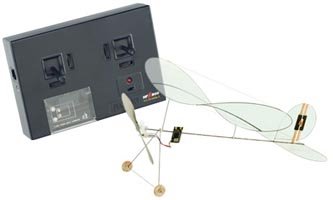
This radio-controlled Carbon Butterfly airplane is the world’s lightest at merely 3.6 grams. Recently improved from a previous design, the new model is super flexible and brand-new to the market. At $300USD, it's a pricey toy, but—nearly indestructible, quiet, durable, and featuring a simple modern design—the cost's worth it.

Sporting a rugged yet elegant Carbon Fiber frame, the Carbon Butterfly is nearly indestructible. As flexible as fiberglass and strong as steel, the Carbon Butterfly can bounce back from almost anything you can throw it at.

Especially considering that most radio-controlled planes are similarly priced, but are difficult to build, noisy, and intended only for outdoor use. Plantraco is easy to use in a tiny apartment ("The coffee table is your runway!") or outside at a range up to 400 feet. You can pre-order from Plantraco or just go to their site to watch the fun living room flight demo.


Plantraco

Ferrari 599 Fiorano Available With iPod Dock


I am really glad this fine car now comes with an iPod dock. Now I think I might get one.

The Ferrari 599 Fiorano is now availible for purchase at dealerships worldwide. The 599 Fiorano was unveiled at this years Geneva Motor Show and was designed by Pininfarina. The car which is named after Ferrari’s test track and the engine displacement has a V12 engine similar to the one used in the Enzo which can output 612 hp. The chassis is based on the 612 hence the striking similarity. The most interesting feature is that the car will come with an iPod dock connector as standard so you will be able to plug your iPod in and listen to it on the Fiorano’s Bose speakers straight away.
Nice. Oh, that is a farking sexy car, btw.

Ferrari website

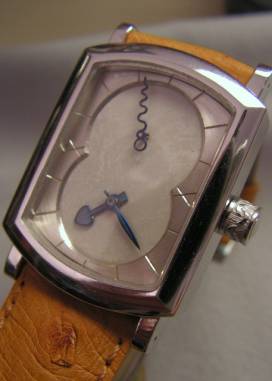
Making a watch by hand

Here is a "how to" on designing your own watch and making it. Handy. Very handy.http://web.ticino.com/dcorson/watch/index.html

Thursday, September 21, 2006

Solaire 56 Inch Gas Grill On Refrigerated Cart


This large 56″ Solaire grill will not just churn-up enough stuff for your barbeque party but will serve your chilled beer needs too with its integrated refrigerated base cabinet. The grill is made in stainless steel and it features two ceramic infrared burners and one double-lanced ported U-burner totaling 82,500 BTU. The unit includes 18,000 BTU infrared rear burner with heavy-duty rotisserie motor, spit rod, and forks. The refrigerator features door section with adjustable shelves and two drawers with removable stainless steel food pans. The unique chill and grill unit sells for $13,699 USD.

Oh yeah. There's a Binford moment for ya.

USB everything?

USBcell
This is pretty cool...Rechargeable Batteries using USB. You can charge them anywhere you have a computer.

USBcell website


Interesting 9/11 opinion

OK,OK I will try to not let conspiracy theories get too much more mention.....

A friend sent me this link to a youtube clip about a 9/11 theory. It's pretty interesting.


Here is the full 90min Documentary that clip was taken from:

Full length, High Quality 9/11 Mysteries Documentary
It's on Google video, which btw is better that you tube.

I just watched it, and I can't help thinking I wonder how long it will be before this is either blown wide apart, or explained....it's got to be one or the other, surely.

categories: [interests_][internet_][movies/TV_]

Monday, September 18, 2006

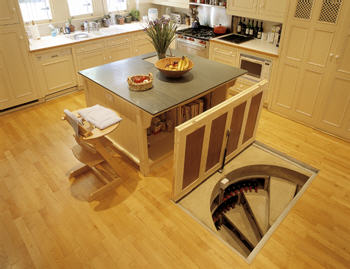
Everyone needs a spiral cellar

OK. The weekend after I make the DIY wind generator, I am going to make one of these with my Dremel. (the fact that right below truantpad is fatnazidoghatingtaiwaneseman only encourages me to pursue this...)

From spiralcellars.com:
The Spiral Cellar system was first developed by a Frenchman, Georges Harnois, in 1978, who recognised that few modern houses had cellars, but people still wanted somewhere to store their wine.

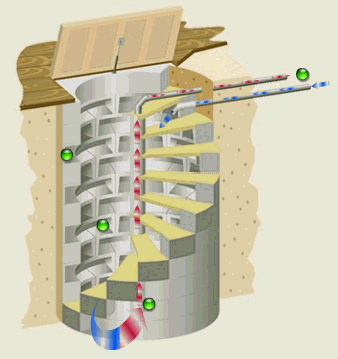
It can keep up to 1,600 bottles in ideal storage conditions and since, like a traditional cellar, it relies on the surrounding earth for its insulation, plus an ingenious air-flow system, it requires no power to maintain its constant temperature.


Hmm, interesting. No really it is. I have always liked the idea of trap doors n shit like that. That's one problem with 20th & 21st Century buildings I find: lack of decent trapdoors.

Perhaps this is the next thing to be incorporated into the design of truantville. Would be quite handy for putting annoying visitor's children.

But...check out these quotes from the site. A bit of a worry:
"The cellar in the garage has been such a success, my husband has decided he'd like to install a second one in the kitchen" Jolly good, eh what?!

"Having a proper wine cellar is like a badge of honor that proves you enjoy food, drink, and the finer things in life" Too rah, old chap!
What about "Cos it's wicked man" and "It's the shit"? Oh well, guess that's what I am not in marketing.

spiralcellars.com

Saturday, September 16, 2006

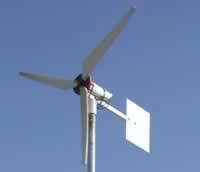
DIY Wind Generator


I'd really like to make one of this next weekend. Seriously.

We have a 2m x 4m balcony, so I reckon I could do it. Better not, Jack likes to hang out there so if there are blades out there chopping in the wind - well, it might end in tears. Maybe up on the roof of the building....hmmm.

From the instructables website...
Chispito Wind Generator
The Chispito Wind Generator was designed to be simple and efficient with fast and easy construction. There are no limits to what you can do with wind power. There is nothing more rewarding and empowering than making a wind powered generator from scrap materials. Most of the tools and materials in this manual can be found in your local hardware shop or junk pile.

Chispito Wind Generator
A really good NZ article about converting washing machines into Wind Generators
Another excellent wind generator site